LiquidMining – Extraction and Recovery of Critical Metals from Natural and Anthropogenic Liquids
- Contact:
- Funding:
Federal Ministry for Economic Affairs and Climate Action (BMWK), 8th Energy Research Program
- Partner:
• University of Augsburg (UniA)
• Karlsruhe Institute of Technology (KIT)
• Leiblein GmbH
• G.E.O.S. Ingenieurgesellschaft mbH - Startdate:
01.09.2025
- Enddate:
31.08.2028
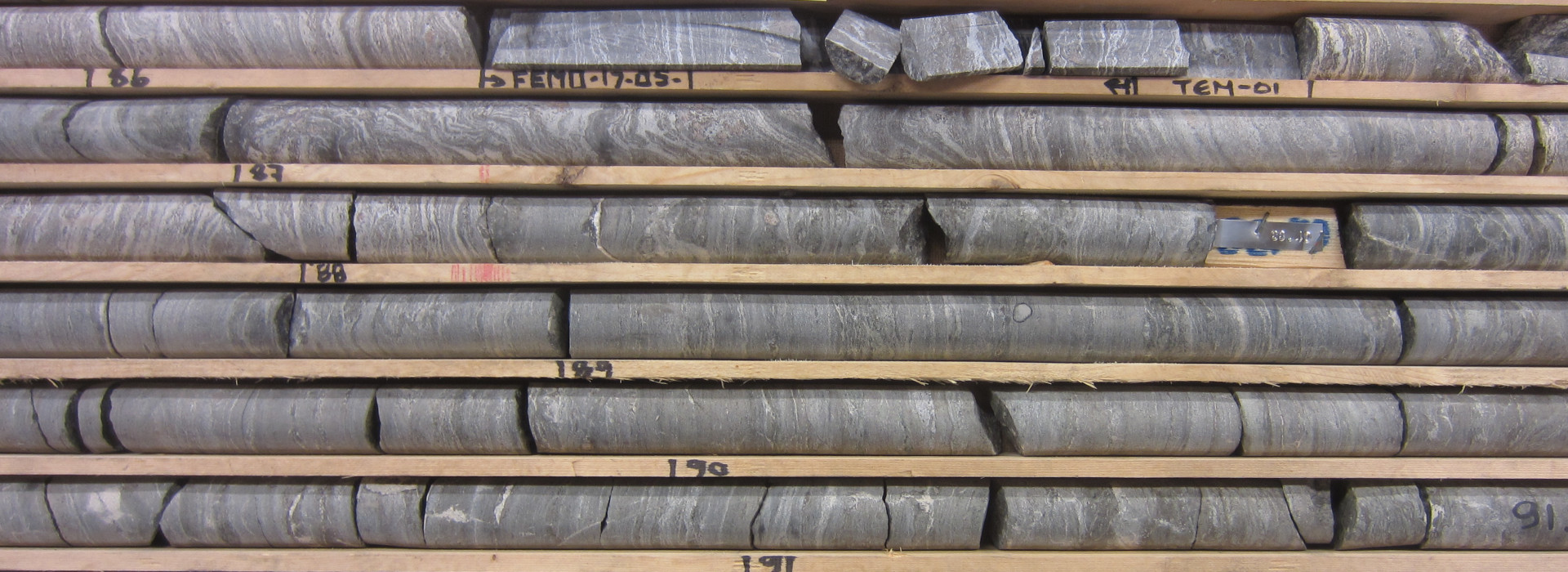
Critical metals such as lithium are of great importance for numerous future technologies. At the same time, Germany is highly dependent on imports for the supply of these raw materials. German thermal waters represent a natural resource that has received little attention to date, as they can contain dissolved critical metals in addition to their existing use as mineral and thermal waters.
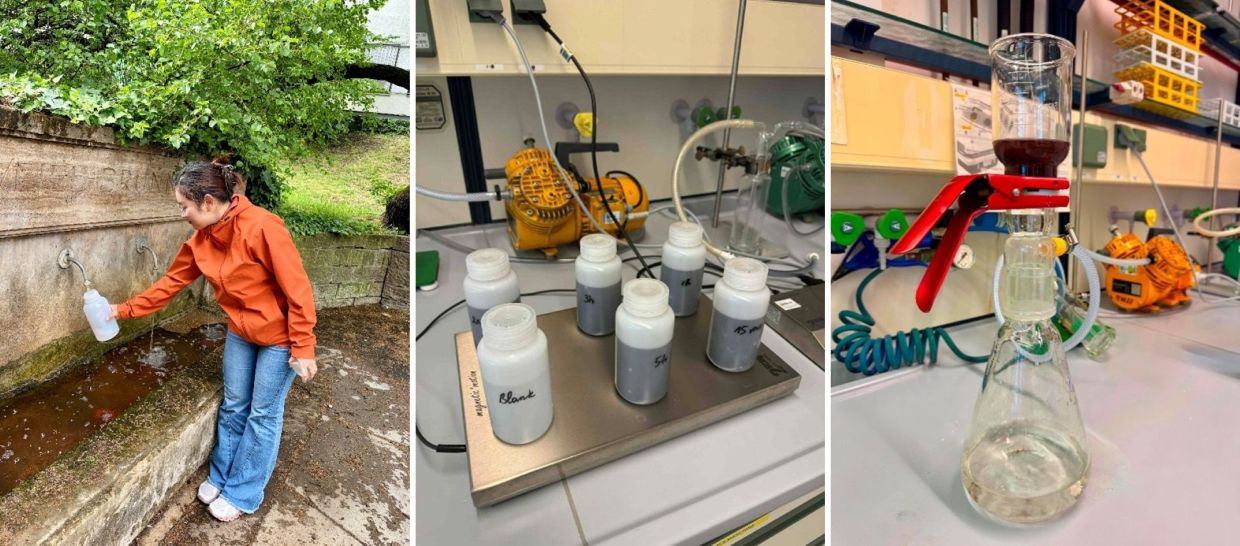
Within the LiquidMining project, KIT is therefore systematically investigating the occurrence and distribution of lithium and other critical metals in German thermal waters. Literature and analytical data are evaluated and complemented by field sampling to assess the raw material potential of these waters.
Based on the geochemical characterization, sorbents for the selective extraction and recovery of critical metals from thermal waters are developed and tested. In addition to commercially available materials, suitable sorbents are specifically conditioned or synthesized. Laboratory experiments investigate sorption capacity, kinetics, and selectivity toward competing ions, and the materials are characterized. Subsequently, methods for the desorption and recovery of the adsorbed metals are developed to enable their selective and efficient recovery from thermal waters.
The aim is to assess the potential of German thermal waters as a domestic source of critical raw materials and to develop new approaches for the recovery of critical metals from these natural waters.