
Mohsin Raza, Master's in Geology
- Raum: 159
CS 50.40 - Tel.: +49 721 608-43315
- mohsin raza ∂does-not-exist.kit edu
- MS Teams-Chat
- Matrix: @ou8533:kit.edu
- Adenauerring 20b
76131 Karlsruhe
Research Interest:
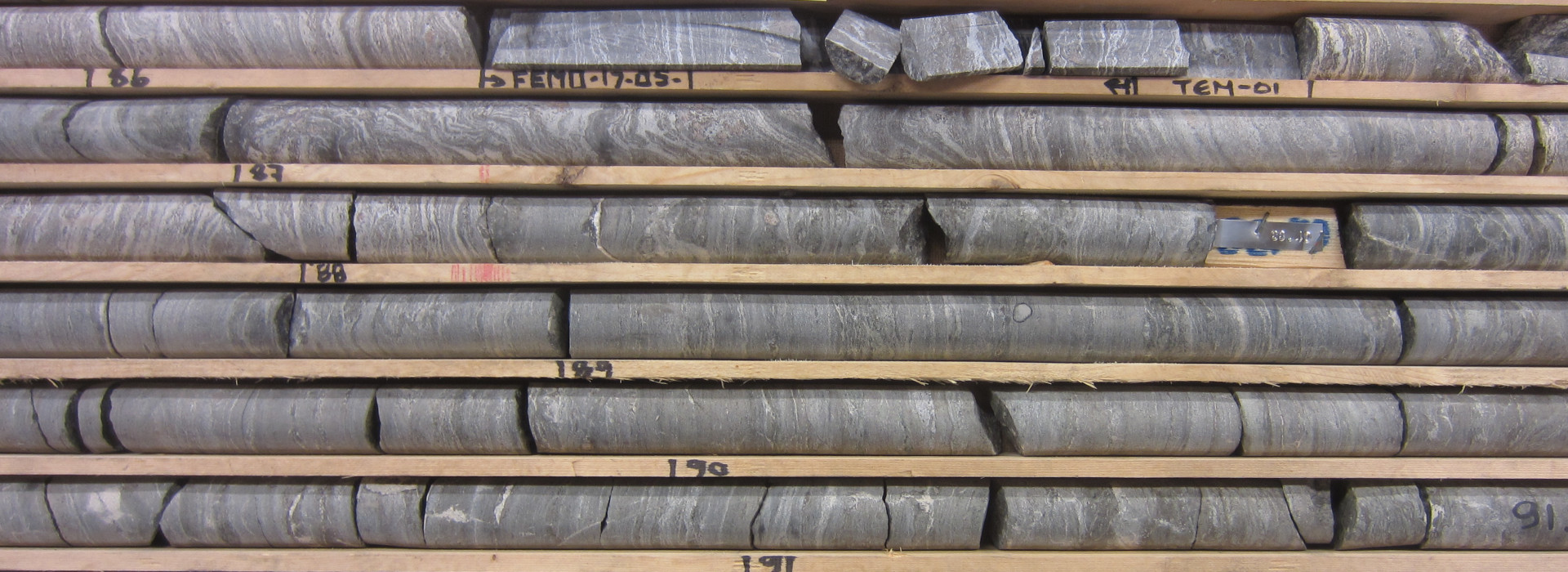
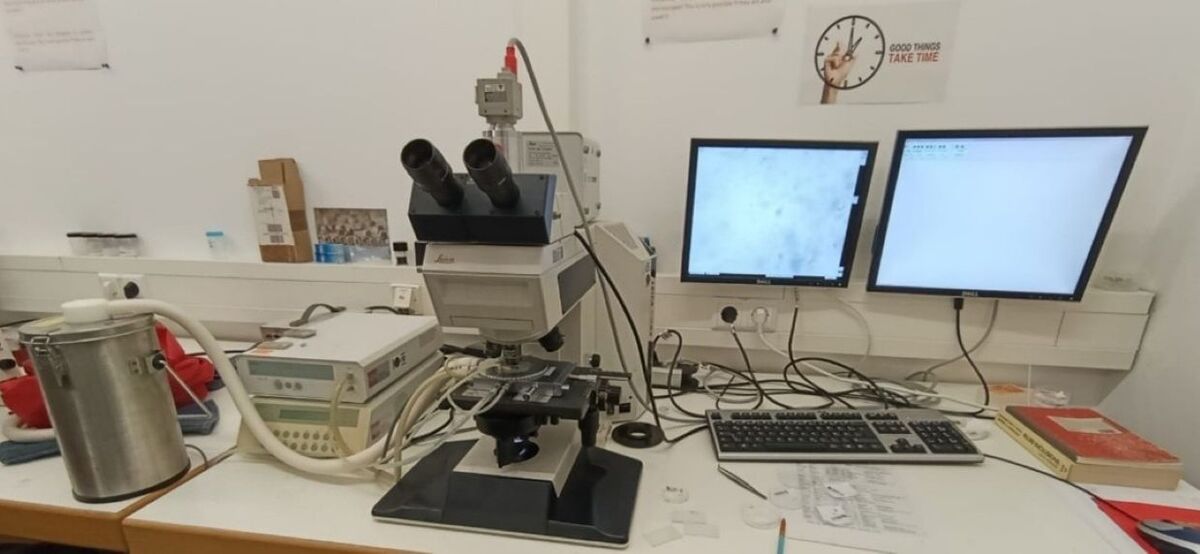
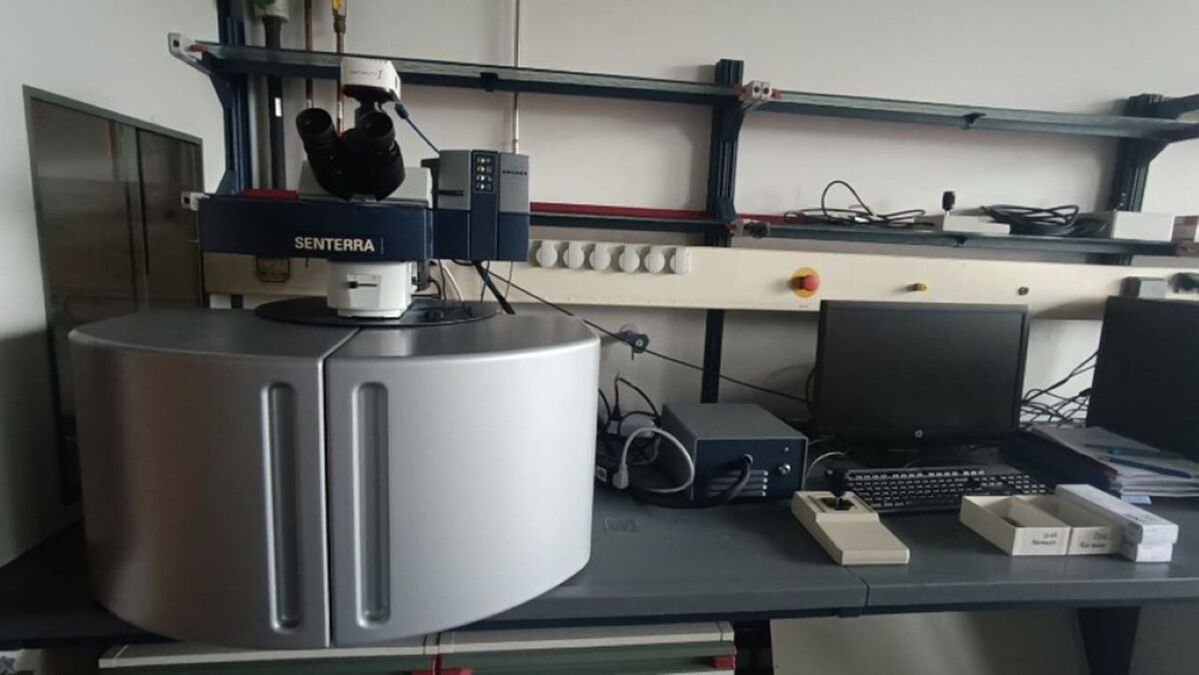
I am interested in the genesis and evolution of magmatic and hydrothermal mineral deposits, including carbonatite-hosted critical metal systems, fluorite and baryte mineralization, and hydrothermal base-metal deposits. My work focuses on understanding the geological, mineralogical, and geochemical processes that control the concentration of economically important elements and the formation of ore deposits. During my Ph.D., I investigated rare earth element (REE) enrichment processes in carbonatite systems, with particular emphasis on the interplay between magmatic and hydrothermal processes. In addition, I am responsible for the Fluid Inclusions Laboratory, where I support research on ore-forming fluids and their evolution through petrographic, microthermometric, and Raman spectroscopic analyses. My research integrates field geology, mineralogy, geochemistry, and fluid inclusion studies to unravel ore-forming processes and contribute to mineral exploration and resource development.
Research Activities:
Carbonatites:
- Magmatic-post-magmatic evolution of South African carbonatites
- The influence of crustal contamination on late-stage REE-mineralization in carbonatites
- The role of fluids in carbonatites
- Petrogenesis of carbonatites and alkaline rocks in Bingo alkaline-carbonatite complex, Democratic Republic of the Congo

Hydrothermal vein type deposits:
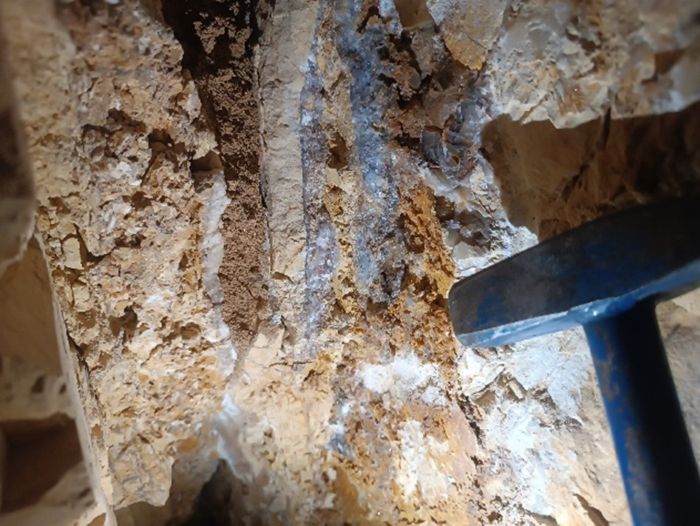
- Fluorite-baryte-quartz veins with base metal mineralization in Morocco, Tunisia, and Nigeria
- Fluorite-baryte mineralization in Khyber Ranges, Pakistan

Other Projects:
- Fluid evolution and geochemistry in the Ivigtut cryolite deposit, South Greenland
- Fluid evolution recorded in ussingite in the Ilímaussaq alkaline complex, South Greenland
Funded Projects:
“The weakly eroded Kruidfontein phonolite-carbonatite volcano – a proxy sound into the interior of the Laacher See volcano” Deutsche Forschungsgemeinschaft (DFG) - Project number 558028028
Carbonatites are relatively rare rocks (~610 occurrences world-wide). About 80 % of all carbonatite occurrences are spatially associated with diverse silicate rocks, whereby the genetic relationship between carbonatites and these silicate rocks is debated with different models. Only a minor proportion of carbonatites (50 occurrences) are extrusive; the associated silicate rocks are mostly nephelinites and phonolites, whereby phonolitic melts are assumed to evolve from parental nephelinitic melts. However, their specific genetic relation to carbonatites is not clear. A good example for this controversity is the Quaternary Laacher See phonolitic volcano, which is part of the Eastern Eifel (Germany). Carbonatites at Laacher See are only known from xenoliths, which indicate a phonolite-carbonatite association at depth. In general, only surface pyroclastic deposits are exposed, while the feeding system, which may show a direct relationship between carbonatites and phonolites, remains unexposed. A better understanding of the holistic structure of Laacher See (as a representative for carbonatite-phonolite complexes) would require a comparison with similar but shallow intrusions and feeding systems that are only slightly eroded to deeper intrusion levels. An ideal candidate for such a comparative study represents the so far poorly studied Kruidfontein Proterozoic phonolite–carbonatite volcano (South Africa).
This project will investigate the Kruidfontein carbonatite-phonolite complex, which preserves surface pyroclastic phonolitic facies that are penetrated by later phonolitic and carbonatitic intrusions at a subsurface level. The carbonatites at Kruidfontain, furthermore, reflect a highly evolved composition represented by fluorite-rich calcite carbonatites and pure fluorite veins. Our study will focus on (1) the eruption mechanism of the Kruidfontein volcano in comparison to the Laacher See volcano, (2) the age determination of Kruidfontein and its temporal assignment into regional magmatic events, and (3) the origin and role of fluorine in the carbonatites. For this purpose, the different lithologies of the Kruidfontein complex will be investigated by means of petrography (microscopy, µXRF, SEM), whole rock analyses (XRF, ICP-MS, CSA), mineral chemistry (EMPA), stable and radiogenic isotopy (IRMS, ICP-MS), and detailed fluid inclusion studies (micro-thermometry, Micro-Raman spectroscopy). Results will be compared with the information available from the Laacher See volcano, which will allow a better understanding of phonolite-carbonatite associations in general.
Memberships:
- Deutsche Mineralogische Gesellschaft (DMG)
- Deutsche Geologische Gesellschaft – Geologische Vereinigung e. V. (DGGV)
- Society for Geology Applied to Mineral Deposits (SGA)
- Geological Society of America (GSA)
- International Association on the Genesis of Ore Deposits (IAGOD)
- European Association of Geochemistry (EAG)
Scholarships and Grants:
- HEC–DAAD PhD Scholarship
- KHYS Research Travel Grant (Research stay, University of Alberta, Canada)
- European Association of Geochemistry (EAG) Grant, Goldschmidt 2025 Conference
Publikationen
Arthuzzi, J. C. L.; Giebel, R. J.; Marks, M. W.; Beranoaguirre, A.; Kimmig, S. R.; Bilau, A.; Macey, P. H.; Reid, D. L.; Raza, M.; Kemmler, L.; Kolb, J.; Markl, G.; Siegfried, P. R.; Walter, B. F.
2027. Journal of African Earth Sciences, 245, Art.Nr: 106352. doi:10.1016/j.jafrearsci.2026.106352
Walter, B. F.; Egesi, N.; Raza, M.; Agbebia, M.; Adamu, F.; Giebel, R. J.; Marks, M. A. W.; Ugbaja, E. C.; Markl, G.
2026. Journal of African Earth Sciences, 235, 105964. doi:10.1016/j.jafrearsci.2025.105964
Kemmler, L.; Giebel, R. J.; Walter, B. F.; Marks, M. A. W.; Reid, D. L.; Raza, M.; Kluge, T.; Markl, G.
2026. Lithos, 530-531, 108485. doi:10.1016/j.lithos.2026.108485
Andrić-Tomašević, N.; Walter, B. F.; Simić, V.; Raza, M.; Životić, D.; Novković, Ž.; Kolb, J.; Gerdes, A.; Beranoaguirre, A.
2025. The Depositional Record, 11 (4), 1029–1062. doi:10.1002/dep2.70017
Raza, M.; Giebel, R. J.; Staude, S.; Beranoaguirre, A.; Kolb, J.; Markl, G.; Walter, B. F.
2025. Geochemistry, 85 (1), 126249. doi:10.1016/j.chemer.2025.126249
Kasay, G. M.; Borst, A. M.; Giebel, J. R.; Bolarinwa, A. T.; Beranoaguirre, A.; Kluge, T.; Aromolaran, O. K.; Raza, M.; Eiche, E.; Kolb, J.; Nzolang, C.; Walter, B. F.
2024. Precambrian Research, 408, Art.-Nr.: 107421. doi:10.1016/j.precamres.2024.107421